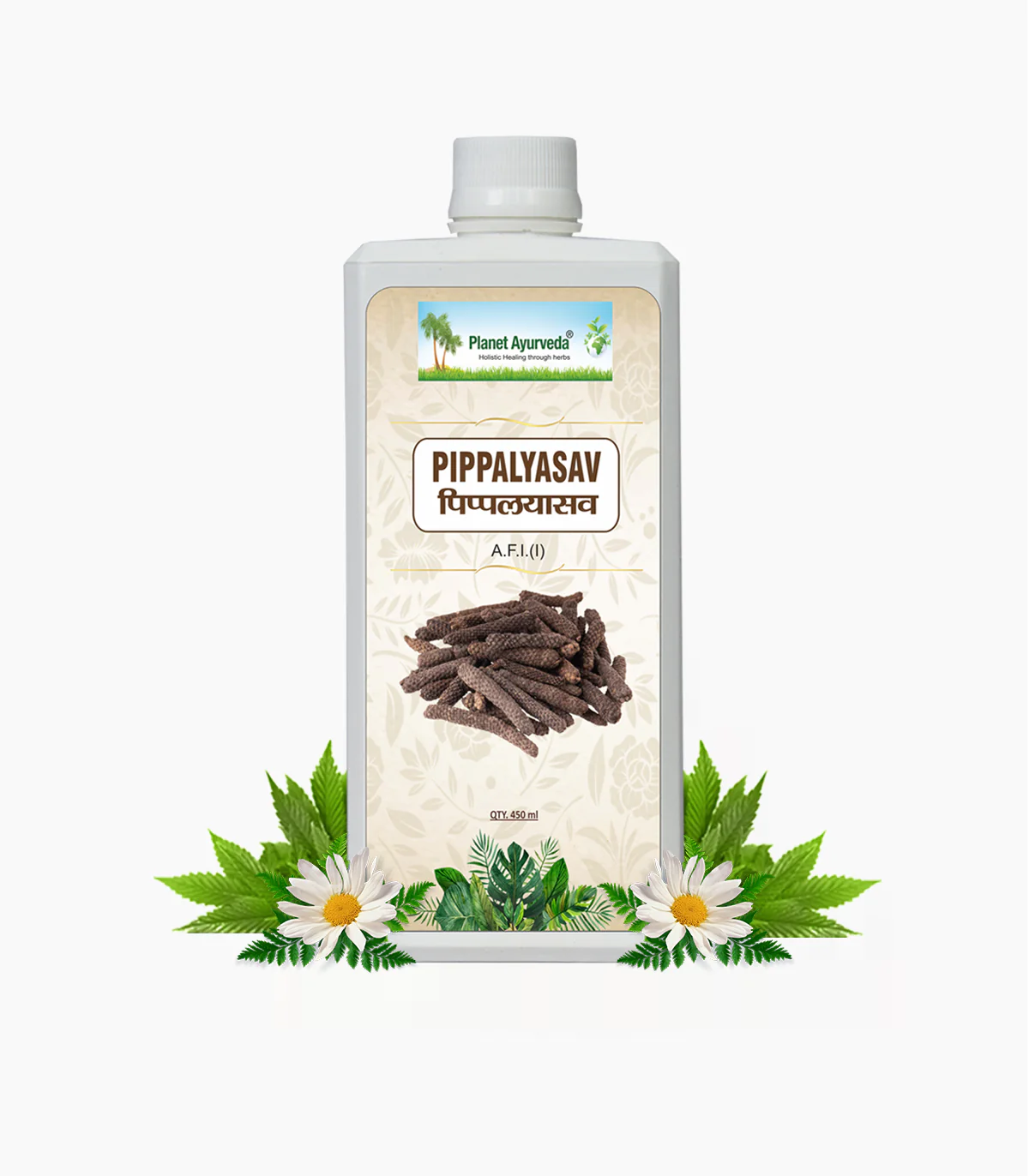
PIPPALYASAV
[shortdesc]
Pack Size: 450ml
Dosage: 10 to 20 ml with equal quantity of water, one to two times a day after meals or as advised by physician.
[/shortdesc][additional]
Each 10 ml contains aqueous extracts derived:
| S. No. | Herb Used | Latin Name | Part Used | Quantity |
| 1. | Pippali | Piper longum | Flower | 1 Part |
| 2. | Kali Mirch | Piper nigrum | Seed | 1 Part |
| 3. | Chavya | Piper retrofractum | Stem | 1 Part |
| 4. | Haldi | Curcuma longa | Rhizome | 1 Part |
| 5. | Chitrak | Plumbago zeylanica | Rt.,Rt.-Bk. | 1 Part |
| 6. | Nagarmotha | Cyperus rotundus | Root | 1 Part |
| 7. | Vaividang | Embelia ribes | Flower | 1 Part |
| 8. | Kramuka | Areca catechu | Seed | 1 Part |
| 9. | Lodhra | Symplocos racemosa | Bark | 1 Part |
| 10. | Patha | Cissampelos pareira | Seed | 1 Part |
| 11. | Amla | Emblica officinalis | Flower | 1 Part |
| 12. | Elavaluka | Prunus cerasus | --- | 1 Part |
| 13. | Khus | Vetiveria zizanioides | Root | 1 Part |
| 14. | Chandan Saphed | Santalum album | Stem | 1 Part |
| 15. | Kuth | Saussurea lappa | Root | 1 Part |
| 16. | Laung | Syzygium aromaticum | Flower | 1 Part |
| 17. | Tagar | Valeriana wallichii | Root | 1 Part |
| 18. | Jatamansi | Nardostachys jatamansi | Root | 1 Part |
| 19. | Dalchini | Cinnamomum zeylanicum | Bark | 1 Part |
| 20. | Choti Elaichi | Elettaria cardamomum | Flower | 1 Part |
| 21. | Tejpatra | Cinnamomum tamala | Leaf | 1 Part |
| 22. | Priyangu | Callicarpa macrophylla | Seed | 1 Part |
| 23. | Nagkeshar | Mesua ferrea | Flower | 1 Part |
| 24. | Dhatkipushpa | Woodfordia fruticosa | Flower | 20 Parts |
| 25. | Munakka | Vitis vinifera | Flower | 120 Parts |
| 26. | Gur | Saccharum officinarum | --- | 600 Parts |
| 27. | Water | Aqua | --- | Q.S. |
Ref. Ayurvedic Text - (भै.र./A.F.I.(1))
[/additional]
पिप्पली मरिचं चव्यं हरिद्रा चित्रको घनः । विडङ्गं क्रमुको लोधः पाठा धात्र्येलवालुकम् ॥६११॥
उशीरं चन्दनं कुष्ठं लवङ्गं तगरं तथा । मांसी त्वगेला पत्रञ्च प्रियङ्ग नागकेशरम् ॥६१२॥
एषामर्द्धपलान् भागान् सूक्ष्मचूर्णीकृताञ्छुभान् । जलद्रोणद्वये क्षिप्त्वा दद्याद् गुडतुलात्रयम् ॥६१३॥
पलानि दश धातक्या द्राक्षा षष्टिपला भवेत् । एतान्येकत्र संयोज्य मृदौ भाण्डे विनिक्षिपेत् ॥६१४॥
ज्ञात्वा रसगतं सर्वं पाययेदग्न्यपेक्षया । क्षयं गुल्मोदरं कार्श्व ग्रहणीं पाण्डुतान्तथा ॥६१५॥
अर्शासि नाशयेच्छीघ्रं पिप्पल्या आसवस्त्वयम् ॥६१६॥
(Bhaishajya Ratnavali / Grahnirogadhikara 8/611–616)
This classical Ayurvedic formulation helps manage conditions such as:
- Grahani Dosha (Malabsorption Syndrome, IBS)
- Gulma (Abdominal Tumors, Abdominal Lump)
- Udara Roga (Chronic Abdominal Disorders)
- Daurbalya (General Weakness)
- Pandu (Anemia)
- Arsha Roga (Hemorrhoids)
- Mandagni (Weak Digestive Fire)
- Kshaya (Wasting Disorders, Pulmonary Tuberculosis, Emaciation)
Pippalyadyasava is a classical Ayurvedic fermented formulation prominently indicated in Kshaya Roga (wasting diseases), Grahani (digestive disorders), and Daurbalya (general debility). As the name suggests, it is a formulation where Pippali (Piper longum) is the chief ingredient, combined with other Deepana (digestive stimulant), Pachana (digestive), and Rasayana (rejuvenative) herbs. Prepared through the traditional Asava fermentation process, this formulation becomes naturally enriched with self-generated alcohol, which aids in the deep tissue penetration and systemic delivery of its phytoconstituents. It is especially effective in cases where Mandagni (weak digestive fire) and Malabsorption (Grahani dosha) lead to chronic fatigue, loss of appetite, and undernourishment.
PIPPALYASAV
[shortdesc]
Pack Size: 450ml
Dosage: 10 to 20 ml with equal quantity of water, one to two times a day after meals or as advised by physician.
[/shortdesc][additional]
Each 10 ml contains aqueous extracts derived:
| S. No. | Herb Used | Latin Name | Part Used | Quantity |
| 1. | Pippali | Piper longum | Flower | 1 Part |
| 2. | Kali Mirch | Piper nigrum | Seed | 1 Part |
| 3. | Chavya | Piper retrofractum | Stem | 1 Part |
| 4. | Haldi | Curcuma longa | Rhizome | 1 Part |
| 5. | Chitrak | Plumbago zeylanica | Rt.,Rt.-Bk. | 1 Part |
| 6. | Nagarmotha | Cyperus rotundus | Root | 1 Part |
| 7. | Vaividang | Embelia ribes | Flower | 1 Part |
| 8. | Kramuka | Areca catechu | Seed | 1 Part |
| 9. | Lodhra | Symplocos racemosa | Bark | 1 Part |
| 10. | Patha | Cissampelos pareira | Seed | 1 Part |
| 11. | Amla | Emblica officinalis | Flower | 1 Part |
| 12. | Elavaluka | Prunus cerasus | --- | 1 Part |
| 13. | Khus | Vetiveria zizanioides | Root | 1 Part |
| 14. | Chandan Saphed | Santalum album | Stem | 1 Part |
| 15. | Kuth | Saussurea lappa | Root | 1 Part |
| 16. | Laung | Syzygium aromaticum | Flower | 1 Part |
| 17. | Tagar | Valeriana wallichii | Root | 1 Part |
| 18. | Jatamansi | Nardostachys jatamansi | Root | 1 Part |
| 19. | Dalchini | Cinnamomum zeylanicum | Bark | 1 Part |
| 20. | Choti Elaichi | Elettaria cardamomum | Flower | 1 Part |
| 21. | Tejpatra | Cinnamomum tamala | Leaf | 1 Part |
| 22. | Priyangu | Callicarpa macrophylla | Seed | 1 Part |
| 23. | Nagkeshar | Mesua ferrea | Flower | 1 Part |
| 24. | Dhatkipushpa | Woodfordia fruticosa | Flower | 20 Parts |
| 25. | Munakka | Vitis vinifera | Flower | 120 Parts |
| 26. | Gur | Saccharum officinarum | --- | 600 Parts |
| 27. | Water | Aqua | --- | Q.S. |
Ref. Ayurvedic Text - (भै.र./A.F.I.(1))
[/additional]
पिप्पली मरिचं चव्यं हरिद्रा चित्रको घनः । विडङ्गं क्रमुको लोधः पाठा धात्र्येलवालुकम् ॥६११॥
उशीरं चन्दनं कुष्ठं लवङ्गं तगरं तथा । मांसी त्वगेला पत्रञ्च प्रियङ्ग नागकेशरम् ॥६१२॥
एषामर्द्धपलान् भागान् सूक्ष्मचूर्णीकृताञ्छुभान् । जलद्रोणद्वये क्षिप्त्वा दद्याद् गुडतुलात्रयम् ॥६१३॥
पलानि दश धातक्या द्राक्षा षष्टिपला भवेत् । एतान्येकत्र संयोज्य मृदौ भाण्डे विनिक्षिपेत् ॥६१४॥
ज्ञात्वा रसगतं सर्वं पाययेदग्न्यपेक्षया । क्षयं गुल्मोदरं कार्श्व ग्रहणीं पाण्डुतान्तथा ॥६१५॥
अर्शासि नाशयेच्छीघ्रं पिप्पल्या आसवस्त्वयम् ॥६१६॥
(Bhaishajya Ratnavali / Grahnirogadhikara 8/611–616)
This classical Ayurvedic formulation helps manage conditions such as:
- Grahani Dosha (Malabsorption Syndrome, IBS)
- Gulma (Abdominal Tumors, Abdominal Lump)
- Udara Roga (Chronic Abdominal Disorders)
- Daurbalya (General Weakness)
- Pandu (Anemia)
- Arsha Roga (Hemorrhoids)
- Mandagni (Weak Digestive Fire)
- Kshaya (Wasting Disorders, Pulmonary Tuberculosis, Emaciation)
Pippalyadyasava is a classical Ayurvedic fermented formulation prominently indicated in Kshaya Roga (wasting diseases), Grahani (digestive disorders), and Daurbalya (general debility). As the name suggests, it is a formulation where Pippali (Piper longum) is the chief ingredient, combined with other Deepana (digestive stimulant), Pachana (digestive), and Rasayana (rejuvenative) herbs. Prepared through the traditional Asava fermentation process, this formulation becomes naturally enriched with self-generated alcohol, which aids in the deep tissue penetration and systemic delivery of its phytoconstituents. It is especially effective in cases where Mandagni (weak digestive fire) and Malabsorption (Grahani dosha) lead to chronic fatigue, loss of appetite, and undernourishment.
Product Information
Product Information
Shipping & Returns
Shipping & Returns
Description
[shortdesc]
Pack Size: 450ml
Dosage: 10 to 20 ml with equal quantity of water, one to two times a day after meals or as advised by physician.
[/shortdesc][additional]
Each 10 ml contains aqueous extracts derived:
| S. No. | Herb Used | Latin Name | Part Used | Quantity |
| 1. | Pippali | Piper longum | Flower | 1 Part |
| 2. | Kali Mirch | Piper nigrum | Seed | 1 Part |
| 3. | Chavya | Piper retrofractum | Stem | 1 Part |
| 4. | Haldi | Curcuma longa | Rhizome | 1 Part |
| 5. | Chitrak | Plumbago zeylanica | Rt.,Rt.-Bk. | 1 Part |
| 6. | Nagarmotha | Cyperus rotundus | Root | 1 Part |
| 7. | Vaividang | Embelia ribes | Flower | 1 Part |
| 8. | Kramuka | Areca catechu | Seed | 1 Part |
| 9. | Lodhra | Symplocos racemosa | Bark | 1 Part |
| 10. | Patha | Cissampelos pareira | Seed | 1 Part |
| 11. | Amla | Emblica officinalis | Flower | 1 Part |
| 12. | Elavaluka | Prunus cerasus | --- | 1 Part |
| 13. | Khus | Vetiveria zizanioides | Root | 1 Part |
| 14. | Chandan Saphed | Santalum album | Stem | 1 Part |
| 15. | Kuth | Saussurea lappa | Root | 1 Part |
| 16. | Laung | Syzygium aromaticum | Flower | 1 Part |
| 17. | Tagar | Valeriana wallichii | Root | 1 Part |
| 18. | Jatamansi | Nardostachys jatamansi | Root | 1 Part |
| 19. | Dalchini | Cinnamomum zeylanicum | Bark | 1 Part |
| 20. | Choti Elaichi | Elettaria cardamomum | Flower | 1 Part |
| 21. | Tejpatra | Cinnamomum tamala | Leaf | 1 Part |
| 22. | Priyangu | Callicarpa macrophylla | Seed | 1 Part |
| 23. | Nagkeshar | Mesua ferrea | Flower | 1 Part |
| 24. | Dhatkipushpa | Woodfordia fruticosa | Flower | 20 Parts |
| 25. | Munakka | Vitis vinifera | Flower | 120 Parts |
| 26. | Gur | Saccharum officinarum | --- | 600 Parts |
| 27. | Water | Aqua | --- | Q.S. |
Ref. Ayurvedic Text - (भै.र./A.F.I.(1))
[/additional]
पिप्पली मरिचं चव्यं हरिद्रा चित्रको घनः । विडङ्गं क्रमुको लोधः पाठा धात्र्येलवालुकम् ॥६११॥
उशीरं चन्दनं कुष्ठं लवङ्गं तगरं तथा । मांसी त्वगेला पत्रञ्च प्रियङ्ग नागकेशरम् ॥६१२॥
एषामर्द्धपलान् भागान् सूक्ष्मचूर्णीकृताञ्छुभान् । जलद्रोणद्वये क्षिप्त्वा दद्याद् गुडतुलात्रयम् ॥६१३॥
पलानि दश धातक्या द्राक्षा षष्टिपला भवेत् । एतान्येकत्र संयोज्य मृदौ भाण्डे विनिक्षिपेत् ॥६१४॥
ज्ञात्वा रसगतं सर्वं पाययेदग्न्यपेक्षया । क्षयं गुल्मोदरं कार्श्व ग्रहणीं पाण्डुतान्तथा ॥६१५॥
अर्शासि नाशयेच्छीघ्रं पिप्पल्या आसवस्त्वयम् ॥६१६॥
(Bhaishajya Ratnavali / Grahnirogadhikara 8/611–616)
This classical Ayurvedic formulation helps manage conditions such as:
- Grahani Dosha (Malabsorption Syndrome, IBS)
- Gulma (Abdominal Tumors, Abdominal Lump)
- Udara Roga (Chronic Abdominal Disorders)
- Daurbalya (General Weakness)
- Pandu (Anemia)
- Arsha Roga (Hemorrhoids)
- Mandagni (Weak Digestive Fire)
- Kshaya (Wasting Disorders, Pulmonary Tuberculosis, Emaciation)
Pippalyadyasava is a classical Ayurvedic fermented formulation prominently indicated in Kshaya Roga (wasting diseases), Grahani (digestive disorders), and Daurbalya (general debility). As the name suggests, it is a formulation where Pippali (Piper longum) is the chief ingredient, combined with other Deepana (digestive stimulant), Pachana (digestive), and Rasayana (rejuvenative) herbs. Prepared through the traditional Asava fermentation process, this formulation becomes naturally enriched with self-generated alcohol, which aids in the deep tissue penetration and systemic delivery of its phytoconstituents. It is especially effective in cases where Mandagni (weak digestive fire) and Malabsorption (Grahani dosha) lead to chronic fatigue, loss of appetite, and undernourishment.